“Control oil and you control nations.” — Henry Kissinger, U.S. Secretary of State (1970s)
Wars in the Middle East rarely remain confined to the battlefield. The current confrontation involving Iran illustrates how modern conflict often unfolds just as much through markets, shipping lanes and energy supply as through missiles or soldiers. Beneath the immediate military exchanges lies a deeper contest over economic pressure and endurance. Iran, constrained by years of sanctions and internal economic strain, has responded by leaning on the one form of leverage it possesses in abundance: geography.
Iran entered the conflict with a fragile economic base. Sanctions have restricted its access to international financial systems, reduced investment and weakened its currency. Inflation remains high, and economic growth has been uneven for years. In conventional economic terms, Iran appears disadvantaged when compared with the combined economic weight of its adversaries and the broader international coalition that often stands behind them. Yet this weakness has influenced Tehran’s strategy rather than eliminated its influence. A country that cannot easily compete in traditional economic terms may instead seek to impose costs on the global system that surrounds it.
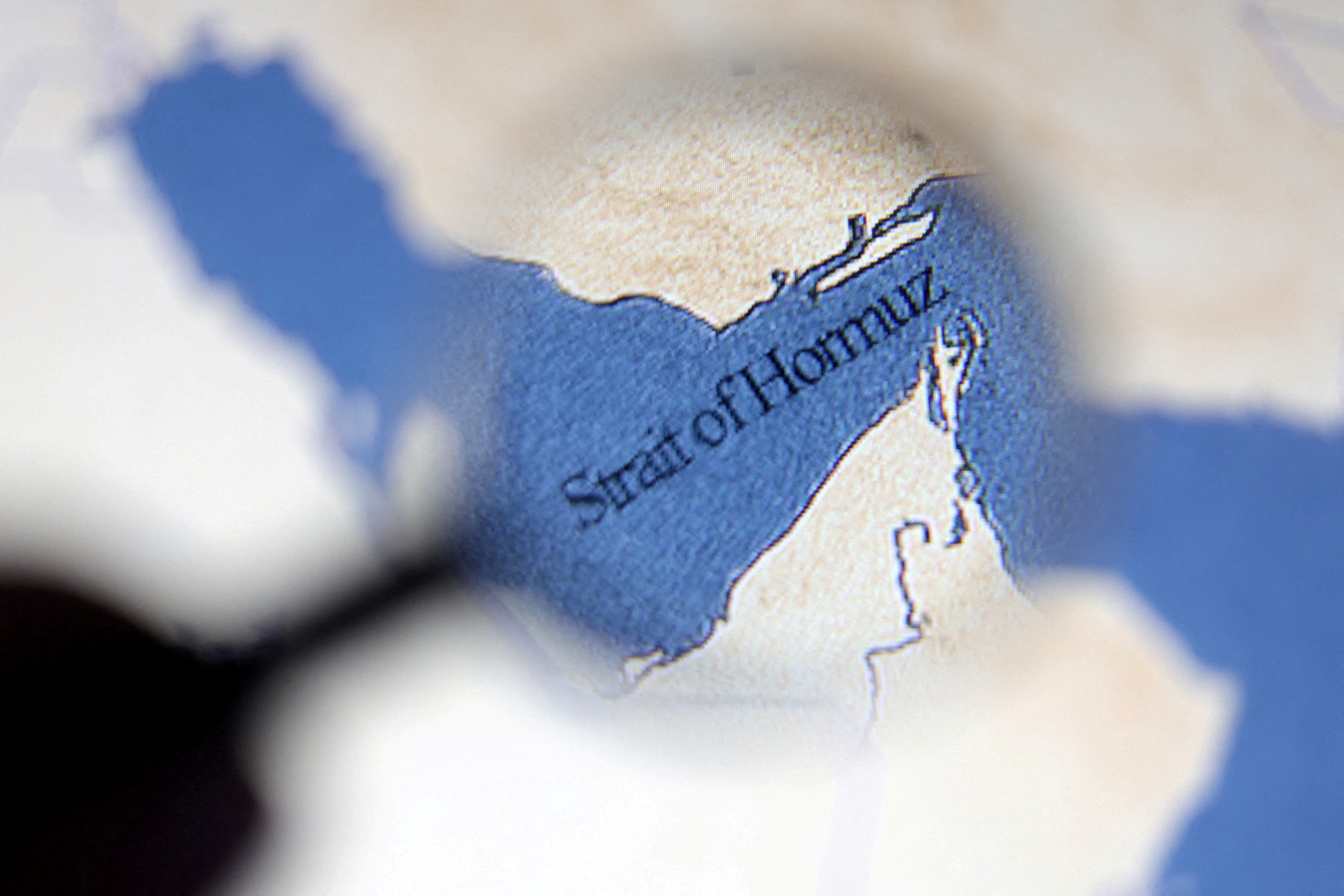
That strategy centres on the Strait of Hormuz, the narrow waterway separating Iran from the Arabian Peninsula and linking the Persian Gulf to the wider world. Roughly a fifth of the world’s traded oil flows through this corridor, along with substantial quantities of liquefied natural gas. Because so much global energy passes through such a confined route, even minor disruptions can trigger immediate reactions in international markets. Insurance premiums for shipping surge, tanker companies reconsider routes and oil traders begin pricing in the possibility of supply shortages. In this sense, uncertainty alone can generate economic consequences.
Iranian leaders have long recognised the strategic value of this chokepoint. In recent remarks, Alireza Tangsiri, the naval commander of the Islamic Revolutionary Guard Corps, warned, “Any vessel intending to cross the Strait of Hormuz must obtain permission from Iran,” implying that ships might require Tehran’s approval to move safely through the waterway. Statements as such are not merely rhetorical flourishes intended for domestic audiences. They signal that Iran views the strait as its most significant strategic asset in a confrontation that extends well beyond traditional military engagements.
Closing the strait outright would be an extreme and risky step. It would provoke a swift international response and potentially draw major powers more directly into the conflict. Yet a complete closure is unnecessary for Iran to achieve its objectives. Sporadic disruptions, ambiguous threats or isolated incidents at sea can be sufficient to unsettle global markets. Energy traders react quickly to perceived risk, and the global economy remains acutely sensitive to sudden shifts in oil supply.
This dynamic reveals the economic logic underpinning Iran’s broader posture. Rather than seeking decisive battlefield victories, Tehran appears to be pursuing a strategy designed to increase the economic costs of conflict for its adversaries and for the global system more broadly. The approach reflects a classic principle of asymmetric power. When a weaker actor confronts stronger rivals, it avoids direct competition and instead targets vulnerabilities within the opponent’s broader network of interests.
In this case, the vulnerability lies in the global dependence on stable energy flows. Countries deeply integrated into international trade from Europe to East Asia are highly exposed to oil shocks. Rising energy prices feed directly into inflation, political pressures and slower economic growth. Governments far removed from the Gulf therefore have a strong incentive to ensure that shipping through the Strait of Hormuz remains uninterrupted. Iran, by contrast, already operates under partial economic isolation. Because its economy is less integrated into global trade networks, the marginal cost of disruption may fall more heavily on others than on Tehran itself.
The result is a paradox. Iran’s economic weakness has not eliminated its strategic leverage. Instead, it has encouraged a strategy built around raising the global cost of confrontation. By threatening or destabilising a key artery of the world’s energy system, Tehran can influence markets and political calculations that extends its territory.
Modern conflicts increasingly blur the line between military and economic arenas. Oil prices, shipping insurance, and supply chains can matter almost as much as military deployments. In this context, the Strait of Hormuz functions not merely as a geographic feature but as an economic pressure point with global impact.
Even far-flung nations such as the Maldives, heavily reliant on imported fuel and tourism linked to global trade, could feel the effects through higher energy costs, increased transportation expenses, and broader economic uncertainty. While the Maldivian government has called for restraint and a peaceful resolution to the Middle East conflict, political observers note that the country’s complete dependence on imported fuel makes it particularly vulnerable to disruptions in global energy markets.
Iran’s economy may remain constrained by sanctions and structural challenges, but its position astride one of the world’s most important energy chokepoints gives it influence disproportionate to its economic size. In a conflict shaped by asymmetry, geography can become a form of power in its own right and the struggle over the Strait of Hormuz shows how easily global markets can become part of the battlefield.
The strait talks are strategic, and its repercussions reach even distant nations, from energy-dependent economies to tourism-reliant states, highlighting how interconnected modern conflicts have become.
 Advertisement
Related Articles
Fitch Upgrades Maldives Sovereign Rating to ‘CCC‑’ as Default Risk Eases
June 3, 2026
Maldives Reaffirms Sovereign Foreign Policy Commitment, Urges Caution in Diplomatic Discourse
May 10, 2026
Maldives Settles USD 400 Million Dollar Swap, Secures New Indian Rupee Facility to Bolster Economy
April 24, 2026
Maldives Settles USD 500 Million Sukuk Debt, Strengthens Fiscal Position
April 2, 2026Latest News
Maldives Govt to Ban Social Media Access for Children Under 16
10 min read
Maldives Tourist Arrivals Rebound in May as Airlines Resume Routes
10 min read
UK Suspends Import Tariff on Maldives Fish Products
10 min read
Maldivian Launches Direct Flights Between Maldives and Australia, Marking New Era in Travel Connectivity
10 min read