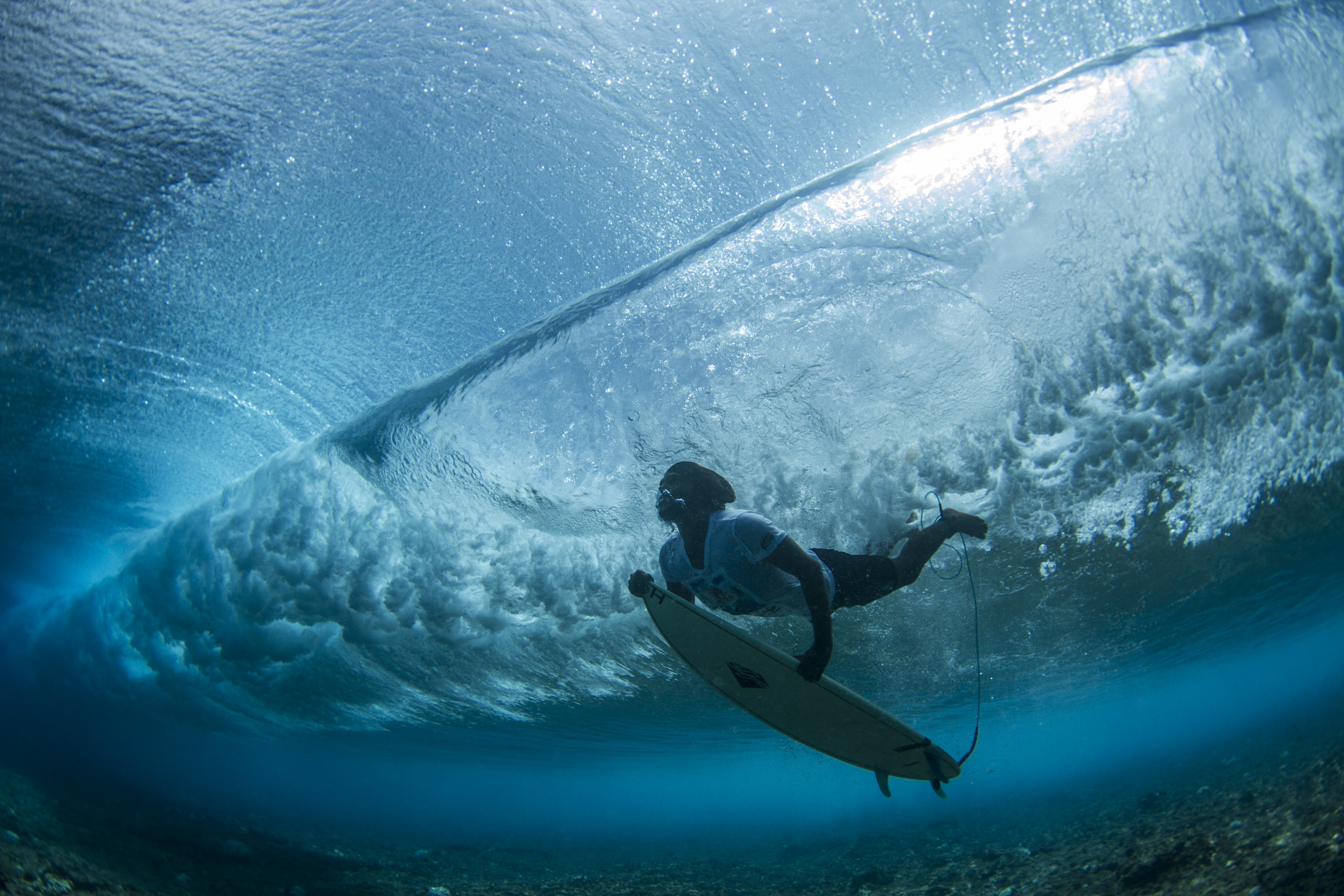
Duck diving through crystal clear water. Thulusdhoo, Maldives
Tracing the cultural roots, social shifts, and modern evolution of surfing in the Maldives, from indigenous wave-riding traditions to a globally recognised sport.
For a nation comprising 99% ocean, it is unsurprising that wave-riding occupies a distinctive place in Maldivian culture. Known locally as Raalhaa Elhun, surfing is one of the few sports in the Maldives with an indigenous name, reflecting a relationship with the ocean that predates modern recreation.
Long before sleek, contemporary surfboards arrived on Maldivian shores, island communities were already engaging with waves as both play and practice. Oral histories, poetry and folklore recount men, women and children gliding across reef breaks through body surfing or balancing on hand-crafted wooden boards known as Malhu.
From Kulhudhuffushi in the north to Fuvahmulah in the south, these traditions surfed across the archipelago, highlighting how the ocean was part of everyday life. The sea was a constant companion in Maldivian existence.
Modern surfing
The modern chapter of Maldivian surfing began unexpectedly in 1973, when Australian surfer Tony Hussein Hinde encountered the waves of North Malé Atoll. En route to East Africa, Hinde was shipwrecked on the reef near Helengeli, an incident that would ultimately alter the cultural and economic trajectory of the Maldives.
Exploring the surrounding waters, he discovered pristine left and right-hand reef breaks near Thanburudhoo Island that were waves unlike anything he had encountered before. At just twenty years old, Hinde recognised the potential of these uncrowded swells and became one of the catalysts for introducing modern surfing to the Maldives.
For more than a decade, Maldivian surf breaks remained a closely guarded secret, shared only with a trusted few. By the late 1980s, however, growing international interest made secrecy impossible. Hinde and his wife Zulfa founded Atoll Adventures, marking the birth of surf tourism in the country at a time when tourism itself was still in its infancy. What began as a niche pursuit would later contribute to the global Maldives ‘brand’.
Cultural shift
The arrival of fibreglass surfboards created a quiet surfing boom in the capital. Early adopters began mastering new techniques, inspiring a generation of young Maldivians drawn to the freedom and exhilaration of a sport that is now widely embraced and trending.
Initially, surfing was met with skepticism. Cultural expectations and traditional family values made participation difficult for many young people, and surfers were often dismissed as Vakarugey Kudhin or delinquents. Over time, however, perceptions shifted. As Maldivian surfers began competing nationally and internationally, the image of surfing transformed from rebellion to discipline, athleticism and pride.
For women, the journey was far more complex. Social norms discouraged female participation, and early women surfers faced significant backlash. Despite this, some emerged steadfast in pursuing their passion. In the early 1990s, Navaal Ahmed from Naifaru in Lhaviyani Atoll distinguished herself as a fearless bodyboarder, tackling powerful waves with quiet determination. Her example helped redefine what was possible, inspiring a small but growing community of women to enter the surf with confidence.
Varunulaa Raalhugandu and more
A well-known reef break off the eastern edge of Malé, Varunulaa Raalhugandu has long served as a gathering point for the country’s early surf community.
By the 1990s, Varunulaa Raalhugandu in Malé had become the heart of local surf culture, bringing together surfers from across the country who had relocated to the capital for education or work. As surf tourism expanded, demand for waves increased, prompting local surfers to explore beyond the surrounding familiar breaks.
In 1993, three friends, Big Mo, Hassan Ziyad and Amin Didi, journeyed south in search of untouched waves. Their journey revealed crystal clear, unridden breaks and opened the door to surf exploration beyond familiar territory. This discovery decentralised Maldivian surfing, opening up wave zones across the northern, central and southern atolls, linking iconic breaks like Pasta Point, Sultans and Honky’s with the raw power of Coke’s, Ying Yangs in Laamu, and Huvadhoo’s Blue Bowls.
At the same time, surf operators such as Atoll Adventures, Noomara Holidays and World Surfaris helped structure the industry, supporting both visiting surfers and local participation.
Surfing the competitions
Competitive surfing in the Maldives took shape in 1996 with the inaugural Pasta Point Invitational, organised by Tony Hinde and held at what is now Cinnamon Dhonveli Maldives. The event, open exclusively to local surfers, was won by eighteen-year-old Hussain “Iboo” Areef, who would go on to become one of the nation’s most celebrated surfers.
The formation of the Maldives Surfing Association in 2001 formalised governance and development. That same year, the World Surf League hosted a qualifying event at Lhohifushi, placing the Maldives firmly on the global competitive map.
Subsequent milestones, including the 2004 Asian Surfing Championships and the Four Seasons Maldives Surfing Champions Trophy in 2007, strengthened the country’s reputation for world-class waves, particularly at classic breaks like the Sultans.
‘Groms’
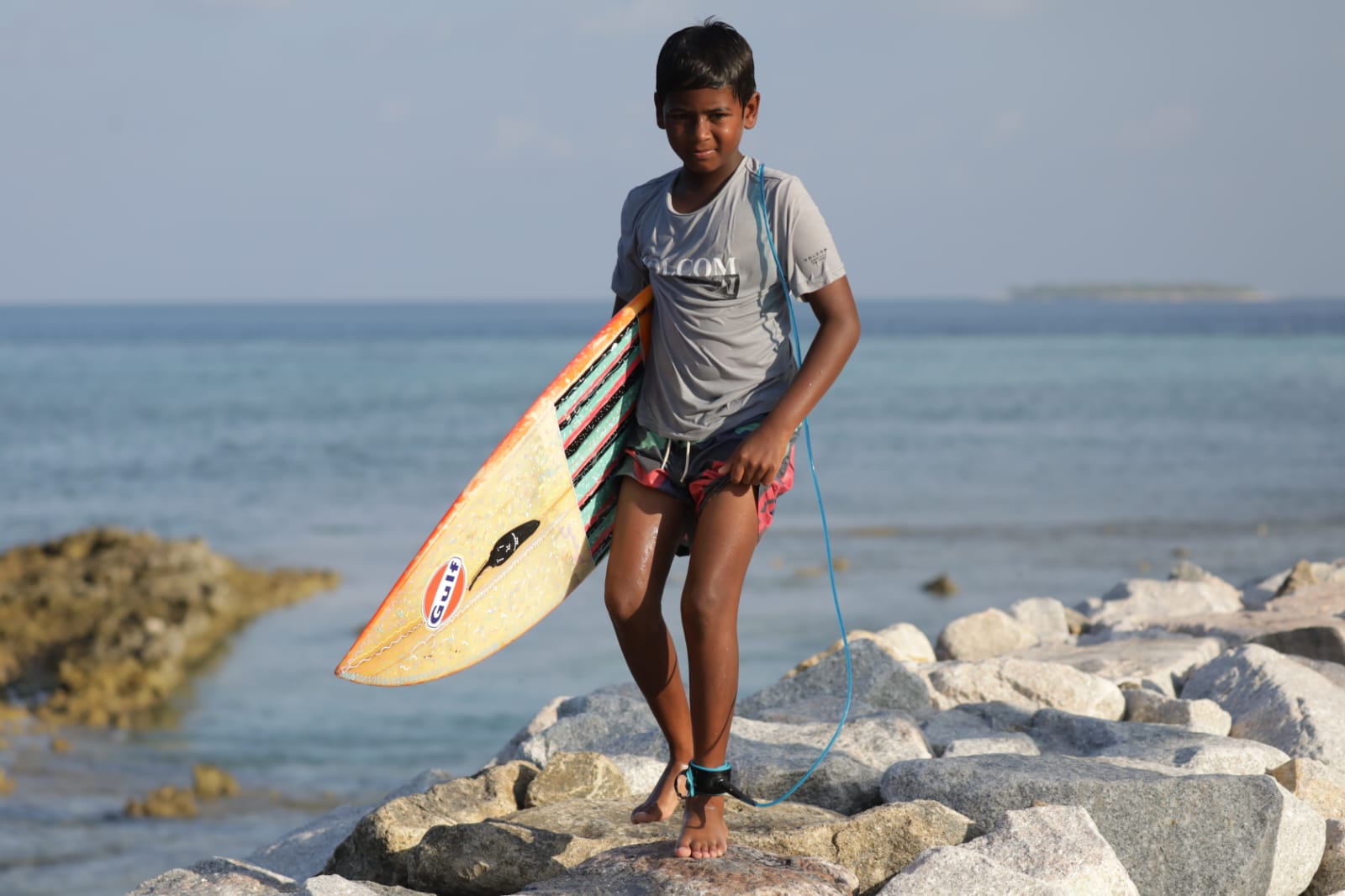
Grassroots initiatives have played a vital role in sustaining the sport. In 2011, Abdul Ghafoor Ali, known as Gabbe, opened a surf school in Malé, providing structured access for children and newcomers, or groms (grommets) as they are affectionately known in the surf community. The Raalhu Edhuru programme, launched in 2015, further expanded its reach by introducing surf camps across multiple islands, gradually easing parental concerns and encouraging youth participation.
These efforts laid the foundation for a stronger local surf community. Today, surf schools, youth clubs and island-based training programmes continue to nurture young talent, while local surfers are increasingly represented in national and regional competitions. With growing community acceptance and institutional support, surfing in the Maldives has become more than a fringe activity.
Surf’s looking up
Despite setbacks during the Covid years, Maldivian surfing has demonstrated resilience. Today, the Dhivehi Surf League hosts competitions nationwide, complemented by youth development programmes that nurture emerging talent.
Local surfers now represent the Maldives on international stages, from the World Surf Games to Asian competitions. Beyond the sport itself, surfing has become an economic and cultural force, creating livelihoods as instructors, guides, photographers and entrepreneurs.
As experienced surfers continue to lead and younger generations paddle out with confidence, Raalhaa Elhun remains both a tribute to the past and a promise for the future, a sign that the surf is definitely looking up.
 Advertisement
Related Articles

Latest News
Fitch Upgrades Maldives Sovereign Rating to ‘CCC‑’ as Default Risk Eases
10 min read
Maldives Govt to Ban Social Media Access for Children Under 16
10 min read
Maldives Tourist Arrivals Rebound in May as Airlines Resume Routes
10 min read
UK Suspends Import Tariff on Maldives Fish Products
10 min read