
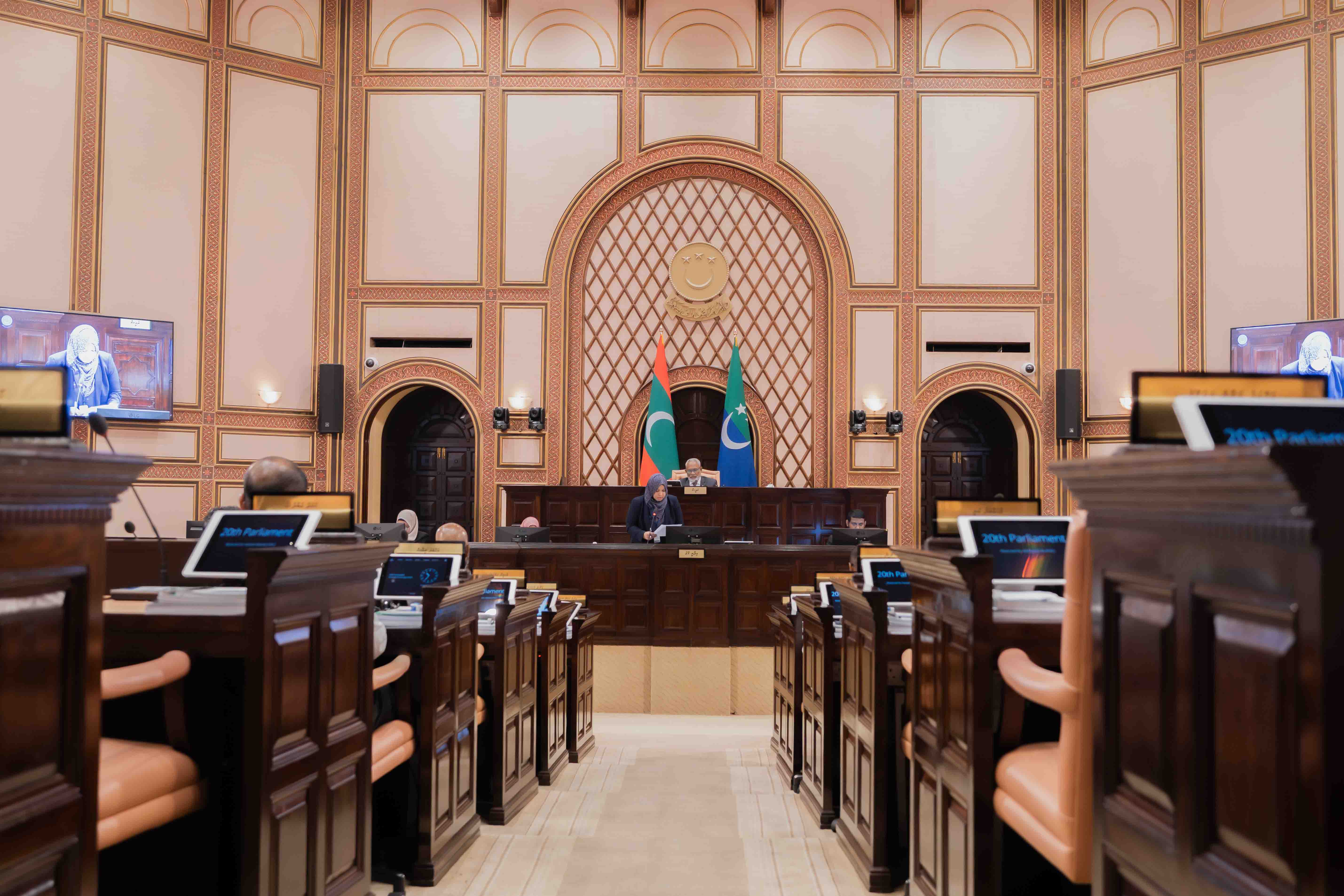
The Supreme Court decisively upheld the constitutional amendment that mandates Members of Parliament lose their seats if they defect from or are expelled by the party under which they were elected.
The ruling dismisses a petition filed by former lawmaker Ali Hussain, who had sought to invalidate the amendment.
The full bench of seven judges, led by Chief Justice Abdul Ghanee Mohamed, delivered the majority judgment, affirming the Parliament's sovereign power to amend the Constitution.
The Chief Justice, reading the central ruling, said that such an amendment is not against the rule of law and aligns with the democratic norms observed in independent and democratic nations worldwide. He specifically noted that similar anti-defection laws are commonplace in presidential systems and other hybrid democracies, serving the vital purpose of closing the door to opportunistic party-switching.
The court directly addressed and rejected several key arguments from the petitioner's counsel. It ruled that there is no legal barrier preventing the amendment from being applied retroactively to the current sitting members of parliament, asserting that there is nothing unconstitutional in doing so. The bench also countered the state’s procedural challenge, clarifying that the Constitution does not explicitly strip the judiciary of its power to review constitutional amendments.
On the critical question of the amendment infringing upon the basic structure doctrine—a judicial principle that protects the Constitution's core identity—the Chief Justice offered a nuanced view. While acknowledging the doctrine's importance in safeguarding constitutional sovereignty, he stated that Parliament itself is empowered to determine what constitutes that basic structure through the amendment process.
The ruling was not unanimous. In a dissenting opinion, Justice Aisha Shujune Muhammad argued for the amendment to be quashed. Justice Shujune contended that MPs are elected based on their individual merit to represent the interests of their constituents, and that binding them too strictly to party policies could create obstacles for fulfilling this primary duty.
This verdict solidifies the legal framework aimed at reducing political volatility and ensures that electoral mandates granted to political parties are respected, marking a pivotal moment for governance in the country.
 Advertisement
Related Articles
Maldives Govt to Ban Social Media Access for Children Under 16
June 1, 2026
Bodies of Four Missing Italian Divers Found After Extensive Search Operation
May 21, 2026
Search for Missing Italian Divers in Maldives Suspended After Coast Guard Fatality
May 17, 2026
Maldives President Visits Tragic Diving Incident Site, Pledges Full Govt Support for Search Operations
May 16, 2026Latest News

Fitch Upgrades Maldives Sovereign Rating to ‘CCC‑’ as Default Risk Eases
10 min read
Maldives Tourist Arrivals Rebound in May as Airlines Resume Routes
10 min read
UK Suspends Import Tariff on Maldives Fish Products
10 min read
Maldivian Launches Direct Flights Between Maldives and Australia, Marking New Era in Travel Connectivity
10 min read