Maldives Waterfront and Marina Could Mark Maldives’ Entry Into the Global Property Market
For more than five decades, the Maldives has sold one thing exceptionally well to the international market: the experience of visiting the Maldives. In doing so, the country has built one of the world...
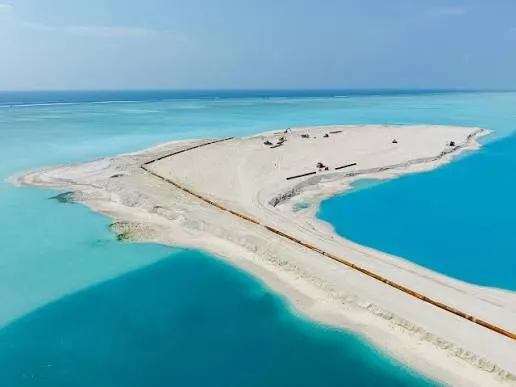
For more than five decades, the Maldives has sold one thing exceptionally well to the international market: the experience of visiting the Maldives. In doing so, the country has built one of the world's most recognisable tourism brands and attracted billions of dollars of foreign investment into resorts, hotels and the wider tourism economy. The Maldives Waterfront and Marina could mark the beginning of something different, the emergence of the Maldives as an international property and investment destination.
At its envisioned scale, the development could create a market in which international buyers and investors put capital not simply into businesses bringing visitors to the Maldives, but into Maldivian residential and commercial property itself.
That distinction could prove significant. A successful international property market would widen the pool of investors able to invest in the Maldives beyond the relatively specialised world of resort development. Individual buyers, developers, international hotel and residence brands, family offices and institutional investors could all become participants in a market built around the Maldives as a place not only to visit, but also to own property, live and invest.
And if such a market can be established at Ras Malé, its significance could extend beyond this single development. It could create the international pricing, investor confidence, development track record and market infrastructure needed for further property investment to follow.
A Development on an Unprecedented Scale
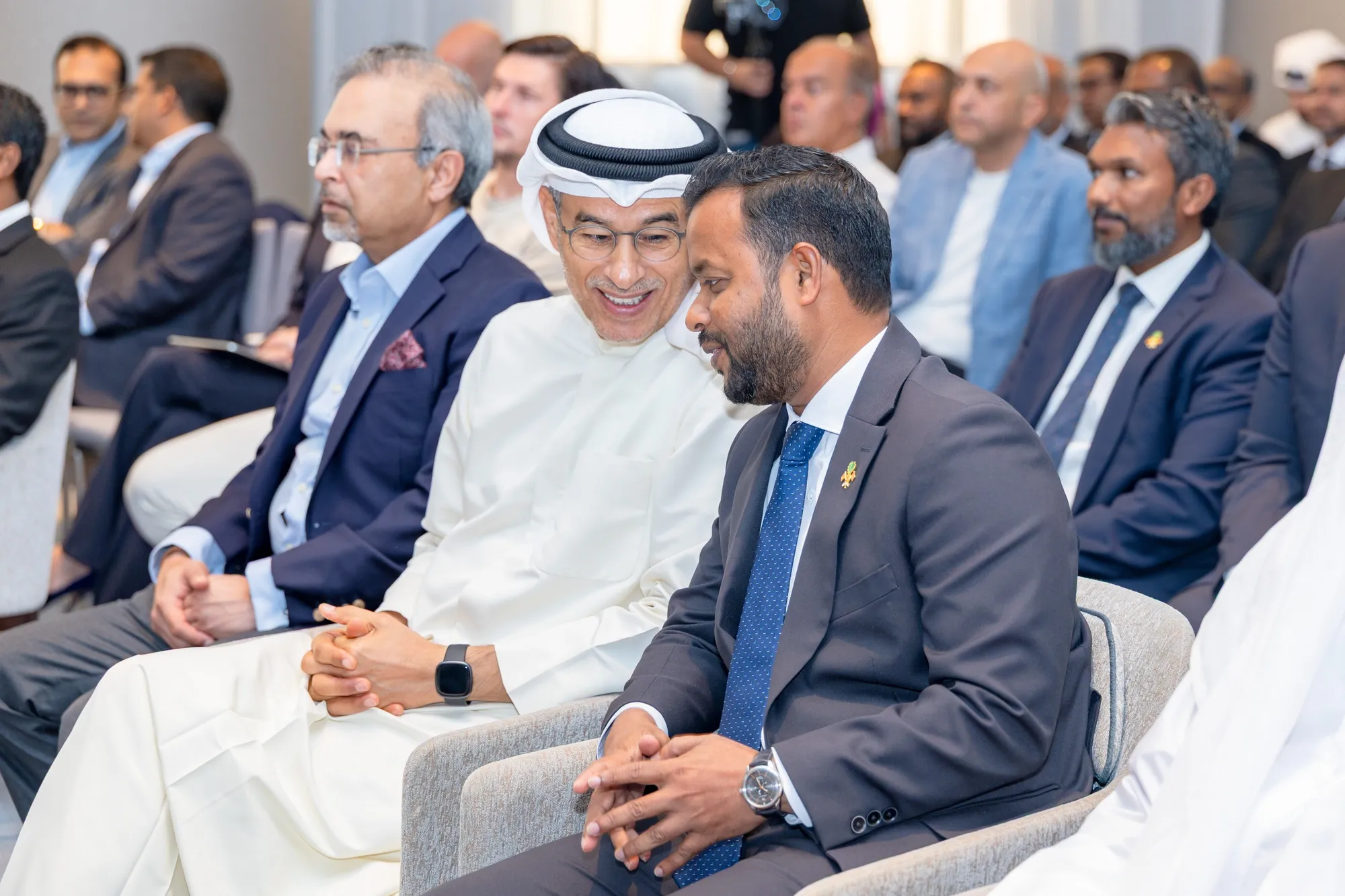
It is against this larger backdrop that the Government of Maldives has entered into a Commercial Terms Agreement with Abu Dhabi-based private real estate developer Eagle Hills for the Maldives Waterfront and Marina, a major multi-phased integrated island destination planned for the Ras Malé area.

The agreement establishes the shared vision and principal commercial terms for the project, with detailed terms to be developed as it progresses. Eagle Hills describes an overall development scale of around USD12 billion across its various phases, making it one of the most ambitious development programmes proposed in the Maldives.
The significance, however, may lie not only in the size of the development itself, but in the investment market it could create around it.
Properties within the destination are planned to be offered under a long-term leasehold framework under Maldivian law, with terms of up to 99 years. Eagle Hills says that upon subsequent sale or inheritance, a new leasehold term of up to 99 years would commence.
This provides the kind of long-term structure required to market Maldivian property to an international buyer base.
From Dubai to Belgrade
Large master-planned destinations of this kind have played an important role in the development of international property markets elsewhere.
Dubai provides perhaps the most familiar example. Developments such as Downtown Dubai and Dubai Marina brought residences, hotels, retail, leisure and commercial activity together within large master-planned destinations, creating internationally traded property markets around places that themselves became global brands.
Mohamed Alabbar, Chairman of Eagle Hills, was the founder of Emaar Properties and played a central role in the development of Downtown Dubai and other major Dubai real estate destinations. He later founded Eagle Hills, which has taken the same broad model of large-scale mixed-use development into markets across Europe, the Middle East and Africa.
One of the clearest comparisons is Belgrade Waterfront in Serbia. Eagle Hills entered the project with the Serbian government in 2015 as a large-scale redevelopment combining residential, commercial and public uses across approximately 177 hectares. It was conceived not simply as a series of buildings but as a new urban destination capable of attracting investment, residents, businesses and visitors.

The Maldives project follows a similar integrated model. Rather than the traditional isolated island resort development for which the Maldives is best known, Maldives Waterfront and Marina is planned to combine international hotels and resorts, premium and branded residences, a megayacht marina, waterfront promenades, dining, retail, entertainment, wellness, education, healthcare and community facilities within a single destination.
Creating a New Channel for Foreign Capital
That combination is important because real estate can create a fundamentally different channel for foreign capital.
A resort generally attracts a developer or investment group making a relatively large investment in a single tourism asset. An international residential development can potentially attract thousands of separate investors purchasing individual properties, alongside developers, hotel operators, brands and commercial investors.
The result is not simply one investment. It is the creation of a market through which capital can continue to enter. Property is developed, sold, resold, financed, leased and managed. International prices begin to emerge. Banks, brokers, valuers, legal firms, property managers, designers and other professional services develop around that market. Over time, the existence of these institutions can make subsequent investment easier.
This is one of the ways in which mature international property destinations have developed into much broader investment ecosystems.
Turning the Maldives Brand Into an Investment Brand
For the Maldives, the opportunity is particularly notable because the country already possesses something that many emerging property markets must spend decades trying to establish: an internationally recognised lifestyle brand.
The Maldives is already associated globally with premium hospitality, waterfront living, privacy and exclusivity. The Waterfront and Marina project would attempt to translate some of that brand value from tourism into property investment.

Instead of monetising the Maldives brand only through the number of nights visitors spend in the country, an international real estate market creates the possibility of monetising it through long-term investment in Maldivian assets.
Alabbar said the project was intended to build on precisely this international appeal. The Maldives is a truly special place, with unmatched beauty and global appeal, he said. Our ambition is to build responsibly on that strength and create something truly world-class.
The potential flow of investment illustrates the scale of that proposition. Preliminary estimates indicate that the development could attract more than USD30 billion in gross foreign investment over its lifetime, including approximately USD18 billion in net foreign investment into the Maldives.
The project is also projected to create more than 54,000 direct and indirect jobs. At full maturity, it is expected to attract more than one million additional visitors and generate over USD2 billion in annual tourism revenue. These remain projections dependent on the development being delivered and achieving the anticipated market response.
A New Economic Pillar
For the Government, the larger objective is to establish real estate as an economic sector in its own right. In Eagle Hills and its Chairman, Mr. Mohamed Alabbar, the Maldives has a partner whose record speaks for itself, from the making of Downtown Dubai to Belgrade Waterfront and destinations across three continents, few names in global real estate carry the same authority in building city-scale destinations from the ground up. That is the calibre of partnership we have secured for Ras Malé, Minister of Infrastructure, Housing and Urban Development Dr Abdulla Muththalib said.
The model also differs from many major infrastructure projects in one important respect.
According to the Government and Eagle Hills, the development is intended to generate revenue for the State from property transactions while being undertaken without sovereign borrowing or tax concessions.
The financing model outlined by Alabbar typically combines developer equity, debt and property pre-sales, with the proportions changing according to market conditions. That means the ultimate scale of the project, and of the foreign investment it generates, will depend significantly on international demand for the properties and destination being created. If that demand materialises, the implications could reach considerably further than Ras Malé.

A functioning international property market would demonstrate that premium Maldivian real estate can be successfully developed, priced and sold internationally. Other developers and investors could then begin considering branded residences, waterfront communities, marina developments and other property products elsewhere in the country.
In that sense, Eagle Hills could become not simply the developer of one exceptionally large project, but the developer that helps establish a new market.
Dr Muththalib described this as the project's most important economic contribution. Most importantly, this project establishes a structured, world-class real estate sector for the Maldives, a new pillar of our economy standing alongside tourism.
Beyond a Single Project
Environmental stewardship will remain an important part of determining how such development proceeds. Eagle Hills says the project will be constructed on already reclaimed land without further dredging by the developer, with independent marine monitoring accompanying construction and climate-resilient infrastructure incorporated into the masterplan.
Much therefore remains to be determined as detailed agreements are concluded and individual phases of the development move forward.
But the larger economic proposition is already clear. For half a century, the Maldives has successfully marketed itself to the world as a destination to visit.
Maldives Waterfront and Marina could begin testing an altogether larger proposition: whether the same global appeal can make the Maldives a destination in which the world also wants to invest.
Leave a comment
Comments
No comments yet. Be the first to comment!