A Billion-Rufiyaa Question: What Is the State Buying When It Buys Fish?
Public purchasing helped transform Maldivian fishing from a household activity into a commercial industry. Half a century later, the country, the workforce and the economics of fishing have changed. T...
Public purchasing helped transform Maldivian fishing from a household activity into a commercial industry. Half a century later, the country, the workforce and the economics of fishing have changed. The case for public support remains, but what that support is intended to achieve is increasingly unclear.
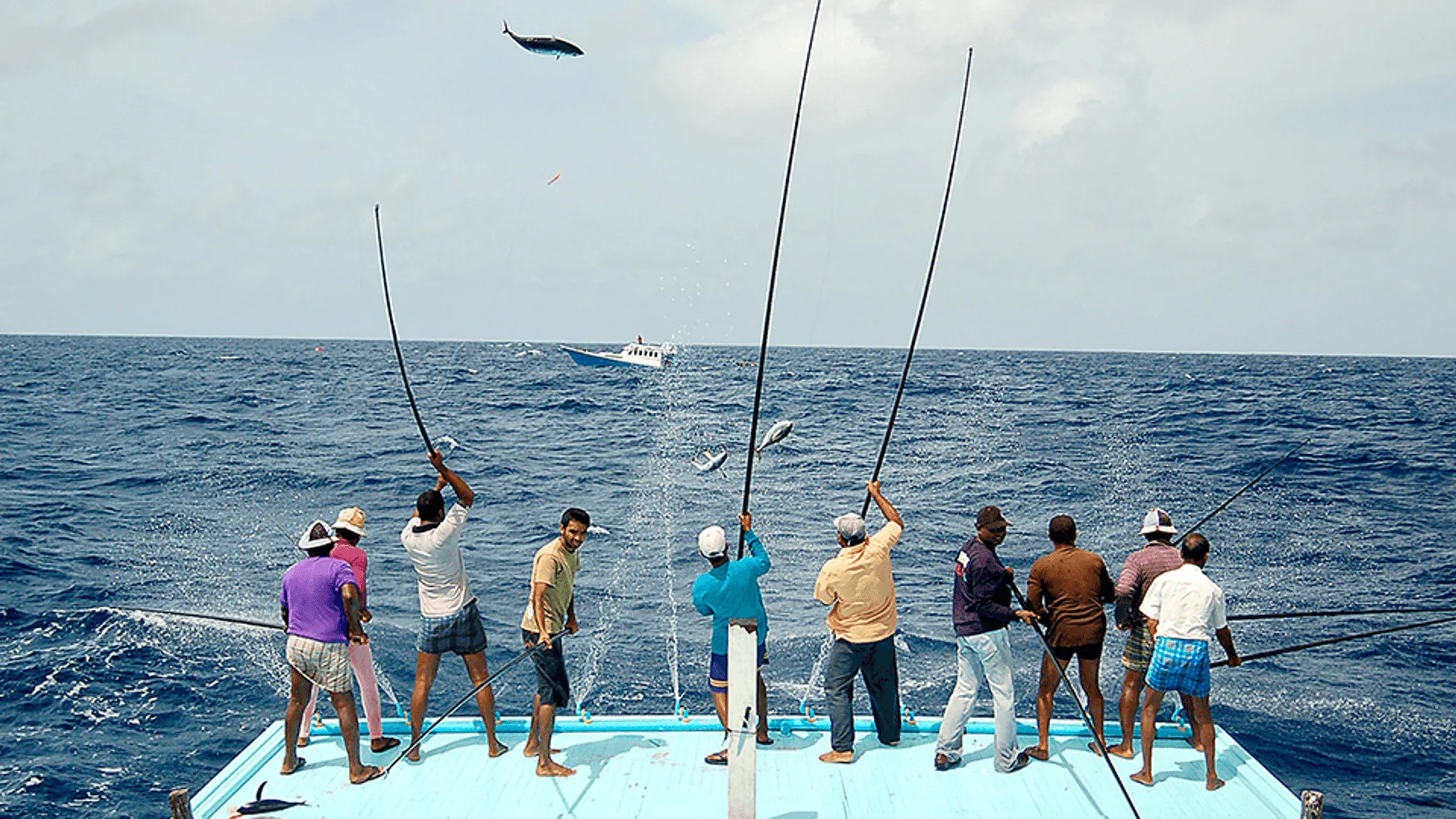
For much of the modern history of Maldivian fishing, the state has tried to remove one uncertainty from a fisherman’s day. The sea may or may not yield tuna. Bait may be difficult to find and the weather may turn. But when the boat returns, there should be someone willing to buy the catch.
That assurance helped build the modern fisheries industry. It converted fish into cash, connected widely scattered island communities to export markets and supported a way of life on which much of the country once depended. It also created an expectation that has proved remarkably durable: government should ensure that the fish is bought, and that the fisherman receives an acceptable price for it.
The policy made compelling sense in the Maldives for which it was designed. Across dozens of islands, fishing was not merely one occupation among several. It sustained virtually the whole community and provided much of what people ate. Historical accounts describe the Maldives as overwhelmingly dependent on tuna fishing, while household processing of smoked and dried fish remained an important part of both food supply and income.
Half a century later, fishing remains economically, culturally and strategically important, but the country, its labour market and the industry itself have changed beyond recognition. The question is therefore no longer simply how much the state should pay for fish. It is what the state is trying to achieve by paying for it.
Before fish became cash
Traditional Maldivian fishing was organised around households as much as around boats. When a vessel returned, its catch was divided according to established sharing arrangements. Fishermen took their portions home, where families cooked, smoked and dried the fish into a product that could be stored, traded and ultimately exported. Women traditionally played a particularly important role in drying and processing fish, making household labour an integral part of the fisheries economy.
Fishing therefore did not originally produce anything resembling a daily wage. The fisherman received fish, the household added labour, and only later did the product become cash. This system was well suited to an industry operating at a traditional scale, but mechanisation changed the equation.
From 1974 the government undertook a major programme to mechanise the country’s pole-and-line vessels, installing engines under a state-backed credit scheme. The change made vessels more versatile and productive and was later described in the Maldives’ own fisheries planning documents as perhaps the most important development in the transformation of the sector from a largely traditional fishery into a commercial industry.
The household economy could not indefinitely absorb the catches of an expanding mechanised fleet. A new market structure was needed, and the state helped provide it.
Public purchasing allowed catches from dispersed islands to be aggregated, frozen or processed and connected to international markets. It gave fishermen confidence that the additional fish made possible by mechanisation could actually be sold. The intervention also changed what was shared at the end of a fishing trip. Traditional arrangements between vessel owners and crews survived, but increasingly the object being divided was no longer the day’s fish. It was the proceeds from selling it.
Fish had become cash.
That was a profound commercialisation of the industry, but it also created one of its enduring problems. Once crews and owners depended on daily sales, the buyer needed the liquidity to pay them. Fuel had to be purchased, vessels provisioned and crews given their share. The public purchasing system therefore became not merely the market for tuna but the mechanism through which cash entered fishing communities.
This is why delayed payments matter so much. They are not simply an inconvenience. A system partly created to turn fish into dependable cash ceases to perform one of its essential functions when fishermen have sold their catch but cannot obtain their money. As catches and the industry expanded, reconciling the obligation to buy with the ability to pay became increasingly difficult.
There was another complication: price.
When prices could fall
It is easy to imagine that government purchasing has always meant government protecting the fish price. The historical record suggests otherwise.
MIFCO’s commercial price records preserved by the Maldives Bureau of Statistics show a purchasing system in which prices moved frequently—and in both directions. Fresh skipjack and yellowfin above 2kg were priced at MVR1.80 per kilogram at the beginning of 1987, increased to MVR2.15 in March and reduced to MVR1.95 in June. Smoked and dried tuna moved from MVR7.50 to MVR9, back to MVR8 and then to MVR10 within the same year.

The historical series extends from 1982 to 2005 and records repeated revisions rather than a steadily protected price. The point is not that these nominal prices should be compared directly with today’s figures; inflation, costs and the structure of the industry have changed too much for that. What matters is the behaviour of the price.
A government-backed buyer and a market-responsive purchase price were once perfectly capable of coexisting. The state could guarantee access to a market without guaranteeing that yesterday’s price would remain tomorrow’s.
Over time, that distinction became harder to preserve. The reason is not difficult to understand. The price paid at the jetty is unusually visible. Raise it by a rufiyaa and every vessel owner can calculate the benefit immediately; reduce it and the loss is equally obvious. That gives the fish purchase price a political importance quite different from many other forms of industrial support.
By the past decade, the price had clearly become an instrument of public policy as well as a commercial one. The Auditor General records government-set rates for normal fish above 1.5kg of MVR18 per kilogram in 2017, MVR14 in 2020, MVR15 in 2022 and MVR23 from September 2023, before the rate was lowered again to MVR18 in February 2024.
International markets, of course, do not move according to Maldivian political cycles. The relevant question is not simply whether the local purchase price is above or below an international tuna quotation. Fresh tuna delivered by a fisherman at a Maldivian collection point is not economically identical to frozen tuna delivered to a major processing market. Freezing, storage, freight, finance, processing and other costs sit between the two.
But those costs have to be paid by somebody. If the price paid for the raw fish leaves insufficient room to meet them, the loss does not disappear. It turns up somewhere else in the system.
Eventually it turned up on the state’s books.
When the subsidy becomes explicit

By 2023 there was no need to infer that fish purchasing was being subsidised. The Auditor General said so directly. The budget provided MVR250m for a fisheries subsidy intended to compensate MIFCO for losses resulting from government-set purchase prices above market rates. The same review also made an important qualification: operational inefficiencies within MIFCO were contributing to the company’s financial difficulties.
That distinction matters. Not every MIFCO loss is a subsidy to fishermen. A processor that freezes inefficiently, carries excessive overheads, incurs avoidable costs or fails to obtain enough value from its exports can lose money even while buying fish at a commercially reasonable price. Poor business performance and fisheries policy are not the same thing.
Yet the purchasing policy was also clearly imposing a cost. By 2024 the mechanism could hardly have been more transparent. Government approved MVR404.4m as fisheries subsidy and disbursed MVR389.5m during the year. Under an agreement with the Finance Ministry, MIFCO was to receive MVR4 for every kilogram of tuna purchased directly from local fishing vessels, specifically to support and maintain the government-regulated purchase price.
Even with that support, MIFCO recorded a loss before tax of MVR165.639m in 2024. At year-end it had accumulated losses exceeding MVR1.03bn and net current liabilities of almost MVR716m. Its auditors said these conditions created material uncertainty over the company’s ability to continue as a going concern.
The wider fiscal exposure had also accumulated over time. The Auditor General found MVR701m in different forms of government financial support to MIFCO between 2016 and 2021, while another MVR272m in Treasury loan balances was waived in 2022.
None of this proves that subsidising fisheries is necessarily bad policy. It proves that it is a subsidy, and once that is acknowledged a more useful question becomes possible: who is it intended to support?
The country the policy was built for
Return to the Maldives of the 1970s and the answer would have been much easier. Government was supporting fishermen, certainly, but in many islands that effectively meant supporting almost everyone. The vessel owner depended on the fishermen; fishing households processed the catch; tuna was an important part of the daily diet; and much of the local economy revolved around the boat, its crew and the sea.
Supporting fisheries therefore simultaneously supported employment, household income, food security and entire island economies. There were few alternatives.
That social and economic structure has changed profoundly. There are no longer dozens of Maldivian islands where virtually every individual depends, directly or indirectly, on fisheries for a livelihood and where the catch is simultaneously central to the community’s daily subsistence.
Tourism transformed employment. Education widened occupational choices. Trade and services expanded, while government administration and state-owned companies created salaried jobs throughout the atolls. The scale of public employment alone illustrates how different the labour market has become: Census 2022 data show public administration and defence as the largest single industry employing Maldivians, accounting for 26,829 jobs.
For an island resident, this changed one of the most important calculations involved in choosing an occupation. In the early years of tourism, leaving fishing for resort work often meant spending long periods away from one’s home island and family. Fishing retained a powerful advantage: it allowed a person to earn an income while remaining within the community. Government and SOE jobs can offer both—a regular salary and the ability to continue living at home. Fishing now has to compete with that.
The consequences are increasingly visible aboard fishing vessels.
The expatriate fisherman
Expatriate crew members have become more visible aboard Maldivian fishing vessels over recent years. There is not yet a reliable public national series showing what share of active fishing crews is expatriate, so it would be premature to attach a percentage to the trend. But the regulatory and employment changes themselves are clear.
Foreign workers were formally permitted to engage in fishing aboard local vessels, and subsequent rules allowed different numbers of expatriate fishermen according to vessel size. MIFCO itself advertised in 2023 for an agency to recruit expatriate crew from India, Sri Lanka, Nepal and Indonesia for its vessels.
The change reflects a wider shift in the labour market. Maldivian workers now have alternatives—among them government and SOE employment—that did not exist when the public fish-purchasing system was built. In the 1970s, public intervention helped make fishing a viable cash livelihood for communities with few alternatives. Today, the expansion of the state and its companies provides some of those alternatives, while fishing enterprises increasingly have the option of filling labour shortages with expatriates.
There is nothing inherently problematic about that. The vessel remains a Maldivian enterprise. Its owner has invested capital, carries commercial risk and contributes to domestic production and exports. But it changes the justification for subsidy. A policy designed to protect the livelihood of Maldivian fishermen is one thing; support for a Maldivian-owned commercial enterprise that may employ foreign labour is another.
Both may be defensible. They are not the same policy objective.
So who are we subsidising?
This is the question policymakers need to answer before deciding what form public support should take. Is the principal objective to preserve Maldivian livelihoods? If so, the number of Maldivians actually employed by the industry and the income reaching their households matter. Is it to support vessel owners and fishing entrepreneurs? There is a legitimate case for doing that too: modern fishing vessels require substantial investment, and the country may have a strategic interest in maintaining a strong domestically owned fleet. But that is industrial policy, not simply livelihood protection.
Perhaps the objective is food security. For an island state heavily dependent on imported food, retaining the capacity to harvest a renewable food resource from its own waters plainly has strategic value. But a food-security programme should ultimately be judged by the resilience and domestic availability it creates, not merely by how much is paid for fish destined for processing or export.
There is also a case based on regional development. Fisheries remain important to many atoll economies and preserve productive activity outside Greater Malé. And there is an export argument: tuna is one of the relatively few substantial physical products the Maldives sells to international markets.
All of these are reasonable objectives. The difficulty is that they are different objectives, while a blanket subsidy embedded in the purchase price of every kilogram of tuna does not distinguish between them. Nor does an expectation that the public sector will absorb whatever fish is landed.
That may have been an elegant solution in an era when supporting the fisherman, the fishing household, the local food supply and much of the island economy amounted to almost the same thing. Today the beneficiaries are more diverse, and policy may need to be equally discriminating.
A market price returns
The argument has now become more than theoretical. In July 2026 Fisheries Minister Ahmed Shiyam told Parliament that government had discontinued subsidies to MIFCO for fish purchasing as part of an effort to make the company self-sustaining. He argued that resources should instead be directed towards processing capacity and fisheries infrastructure.
At the same time, purchase prices have again begun to move. MIFCO raised the skipjack rate from MVR17 to MVR18.50 in early June and, less than two days later, to MVR20 per kilogram. The company now publishes its purchase prices daily, and the MMA’s June series also records an iced-skipjack price of MVR20.
In one respect this resembles the older purchasing system more closely than the policy that evolved later: the state remains an important buyer, but the price is again expected to move.
Whether that arrangement can survive the next downturn will be the real test. If world tuna prices fall sharply, political pressure to protect fishermen will return. If MIFCO remains inefficient, removing the explicit subsidy will not by itself make the company commercially viable. And if cash shortages again result in long delays in paying fishermen, the underlying problem will simply have appeared in another form.
The answer may therefore lie less in manipulating the price at which MIFCO buys tuna than in increasing the value of what it sells.
What happens after the fish is bought?
For decades, fisheries politics has concentrated heavily on one highly visible number: the rufiyaa paid per kilogram at the collection point. The more consequential number may be the value of that kilogram when it leaves the Maldives.
A fish frozen and sold into a commodity market captures one level of value; the same fish processed into higher-value consumer products, sold into premium markets or differentiated through the Maldives’ pole-and-line credentials can capture another. Greater value addition would therefore do more than improve a processor’s margins. It could also create employment on land—in processing, logistics, quality control, product development, marketing and distribution—for Maldivians who may have little desire to spend their working lives at sea.
That would align fisheries development more closely with the labour market the Maldives has today rather than the one it had when mechanisation began. It does not provide an easy answer to the fisherman arriving tomorrow morning with several tonnes of skipjack. But that is precisely the policy dilemma: the immediate need to sustain the harvesting sector has to be reconciled with the longer-term need to create more value after the fish is landed.
Higher-value processing could also change the arithmetic of public support. If more value can be extracted from each tonne, there is more room to pay fishermen sustainably without requiring the state to cover the difference. If it cannot, pressure will eventually return either to the purchase price, MIFCO’s balance sheet or the government budget.
When success changes the problem
The original public purchasing system should not be judged as a failed economic experiment. Quite the opposite. Government intervention helped solve the problem it was designed to solve. It gave an expanding commercial fishery access to a dependable market, helped convert a household-processing economy into a cash industry and, at a time when whole island communities depended on fishing, made public support for fisheries almost indistinguishable from support for those communities themselves.
Its success helped create a country in which the original problem is no longer the same. Maldivians now have many more ways to earn a living. The state and its companies have themselves become important employers. Fishing vessels are increasingly substantial commercial assets, and expatriate crews can supplement local labour. The industry trades into international markets whose prices cannot permanently be insulated by government decree, while MIFCO’s financial history demonstrates the limits of asking one public company simultaneously to fulfil social, political and commercial objectives.
None of this is an argument for government to walk away from fisheries. It is an argument for thinking much harder about what government support is supposed to achieve. If the objective is livelihoods, policy should be designed around livelihoods; if it is food security, it should be measured against food security; if it is about supporting Maldivian entrepreneurs, that should be stated clearly and judged accordingly. The same applies to exports, value addition and foreign exchange.
If the Maldives believes fishing is sufficiently important to justify support for all of these reasons, then the scale and form of that support should be transparent. There may still be a compelling public interest in maintaining a strong domestic fishery. But once the objective is defined, policymakers can ask whether subsidising every kilogram purchased is really the most effective way to achieve it—or whether some of the same resources would produce greater returns through processing, infrastructure, technology, market development or employment.
For half a century, much of Maldivian fisheries policy has been organised around ensuring that somebody buys the fish. The question for the next half-century is more demanding:
What, exactly, does the country want its support for fisheries to buy?
Editor's Note: This article draws on historical fisheries records, Maldives Bureau of Statistics data, Maldives Monetary Authority price series, Auditor General reports, MIFCO’s audited financial statements and official policy statements to examine how public fish purchasing evolved, and what public support to the sector is now intended to achieve..
Leave a comment
Comments
No comments yet. Be the first to comment!