Assets, Not Settlers: Why Foreign Property Buyers Will Not Reshape Ras Malé’s Demographic Landscape!
By analysing comparable master-planned island marina developments across the globe, real-world data demonstrates that luxury foreign-lease units serve as commercial tourism assets rather than long-term primary dwellings.
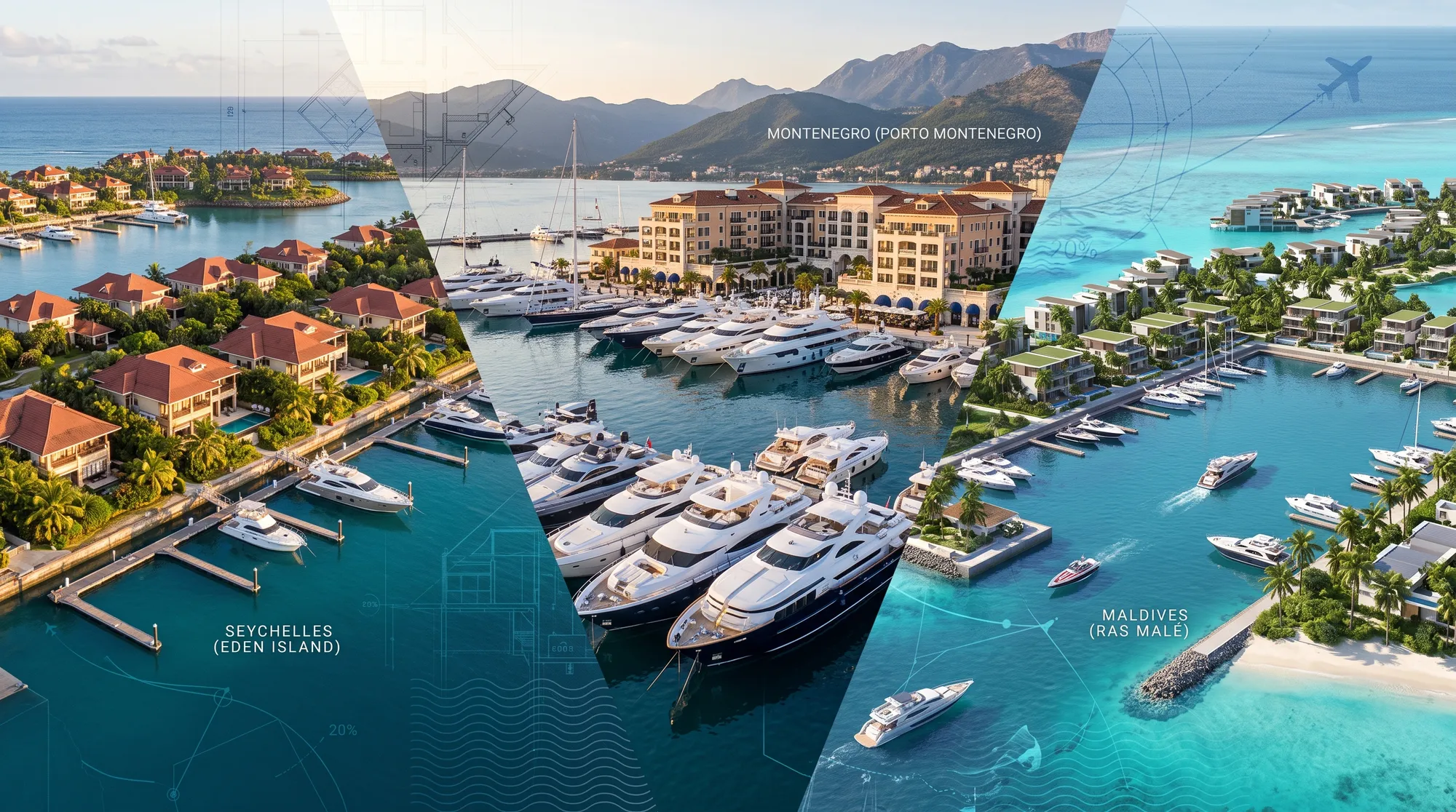
By analysing comparable master-planned island marina developments across the globe, real-world data demonstrates that luxury foreign-lease units serve as commercial tourism assets rather than long-term primary dwellings.
Whenever a major coastal nation introduces an ambitious reclamation and waterfront master plan, public debate predictably converges on a singular anxiety: the prospect of foreign real estate buyers permanently altering the host country's demographic balance. The Maldives Marina and Waterfront development at Ras Malé has triggered similar speculation, with domestic conversations raising concerns that international buyers might purchase luxury waterfront units and establish permanent, year-round enclaves.
Yet empirical data from comparable international marina and waterfront projects across the Seychelles, the Mediterranean, and the Caribbean paints an entirely different picture. When international high-net-worth buyers invest in island waterfront master developments, they do not behave like traditional residential immigrants. In fact, fewer than 20 percent ever become long-term residents. Instead, global market dynamics indicate that these assets naturally function as hospitality-linked financial instruments, seasonal retreats, and vehicles for luxury tourism revenue.
The Global Blueprint: How Waterfront Buyers Actually Behave
To understand how Ras Malé’s marina and waterfront footprint is likely to function, one must look at existing master-planned coastal benchmarks that cater to the same buyer profile.
Eden Island, Seychelles: The Direct Precedent
Perhaps the closest analogue to the Maldives is Eden Island, an artificial residential marina connected to the main island of Mahé in the Seychelles. When launched, Eden Island offered freehold and long-term lease title to foreign buyers, complete with private marina berths and eligibility for residency permits.
Critics initially warned that the island would become a foreign colony. Two decades on, the reality is starkly commercial:
Under 18 percent of foreign owners reside on Eden Island year-round.
The typical property owner spends between 4 to 8 weeks per year on site.
The remaining 10 to 11 months, these units are placed inside professionally managed short-term rental pools, functioning as high-end tourist accommodation that feeds foreign exchange directly into local operations, housekeeping, water transport, and municipal maintenance fees.
Porto Montenegro: The Seasonal Yachting Hub
Built on a historic naval facility in the Bay of Kotor, Porto Montenegro attracted global capital through marina berths, retail strips, and upscale apartments. Despite offering favorable tax structures and residency-by-investment routes, its community remains strictly seasonal. High-occupancy periods are concentrated almost entirely within the ninety-day European summer yachting window. Outside this window, occupancy plummets, as the global ultra-wealthy migrate back to their home bases in London, Zurich, Dubai, or Singapore.
3. Albany and Lyford Cay, The Bahamas
In the Bahamas, high-end gated marina estates cater to international elites seeking warm-weather second homes. Even with minimal property-linked physical residency thresholds—often requiring as little as 90 days of local presence annually to maintain fiscal residency status—the vast majority of foreign owners depart immediately once that operational baseline is satisfied.
Why Foreign Buyers Do Not Settle Permanently
The structural gap between buying a luxury waterfront unit and permanently relocating to an island destination boils down to three fundamentals:
1. Capital Allocation vs. Relocation
High-net-worth individuals purchasing waterfront marina villas do not view these purchases through the lens of a primary family home. They treat them as portfolio assets—hedges against inflation, lifestyle retreats, or capital deployments that generate passive hospitality yields. For roughly 70 percent to 80 percent of buyers, enrolling the property in a branded hotel operator’s managed rental scheme is an explicit condition of purchase. The unit functions as a private hotel suite during family vacations and a tourist-generating commercial suite for the rest of the year.
2. The Missing Daily Ecosystem
True permanent relocation requires an extensive urban infrastructure that purely lifestyle-oriented master plans do not naturally provide—comprehensive international baccalaureate schooling, specialised multi-departmental tertiary healthcare, corporate headquarters, and broad professional employment markets.
Without these institutions, expat families cannot sustainably relocate on a multi-generational, full-time basis. Coastal marina projects are designed for leisure, marine transit, and hospitality—environments uniquely suited for transient stays rather than lifelong domicile.
3. Legal and Sovereign Safeguards
Under standard international practice—and consistent with Maldivian foreign investment, tourism legal frameworks and the government’s continued insistence—property acquisition within integrated tourism or commercial development zones conveys leasehold rights or strata usage. It does not confer automatic citizenship, sovereign franchise, or unmonitored permanent rights. Property ownership remains an economic transaction, distinct from the legal rights of citizenship and political participation.
What This Means for Ras Malé
When contextualised against global precedent, the narrative surrounding the Ras Malé Waterfront and Marina becomes grounded in economic reality rather than demographic anxiety.
Rather than importing an intractable resident population, comparable international developments prove that international real estate capital functions as an extension of the destination’s hospitality product. Far from displacing the local population or permanently occupying urban space, foreign purchasers provide upfront development capital, underwrite maintenance costs through substantial service charges, and supply a pipeline of high-spending visitors whose off-resort spending supports domestic service sectors.
For Ras Malé, international data offers a reassuring baseline: luxury waterfront developments do not create permanent settlements of foreign owners. They build world-class tourism infrastructure funded by foreign capital, while the sovereignty and demographic integrity of the nation remain entirely intact.
Leave a comment
Comments
No comments yet. Be the first to comment!