Minister Muththalib Rebuts ‘Flawed’ USD 24 Billion Rasmalé Valuation, Defends Landmark Eagle Hills Partnership
“The real choice was between reclaimed land that waits — for a billion dollars of services we would have to borrow, and for buyers who may never come — and a partnership that starts building an economy now, funds homes first, and pays the State on every sale.”
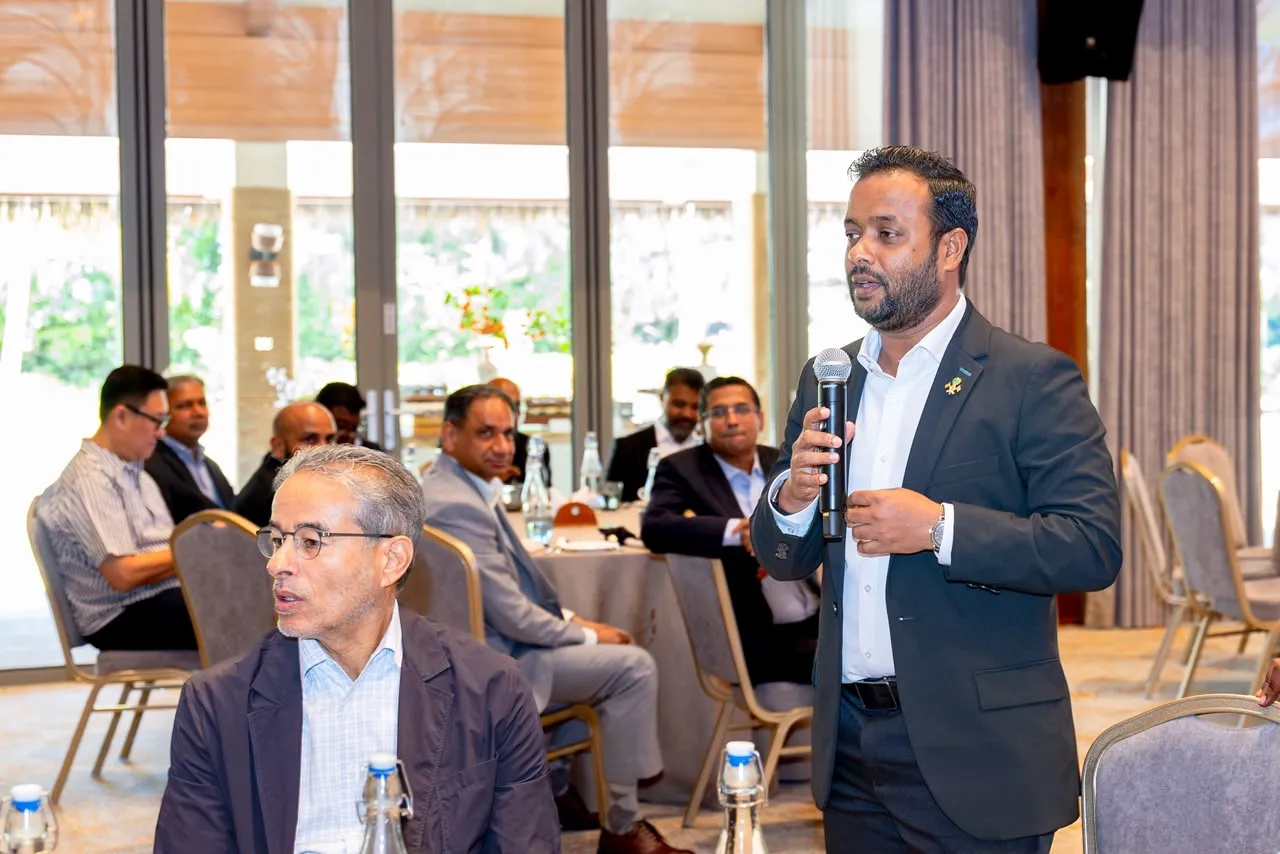
Minister of Infrastructure, Housing and Urban Development, Dr Abdulla Muththalib has issued a comprehensive, point-by-point rebuttal against claims that the state is underselling reclaimed land at Rasmalé, calling a recent valuation that pegged 500 hectares of the project at USD 24 billion fundamentally detached from economic reality.
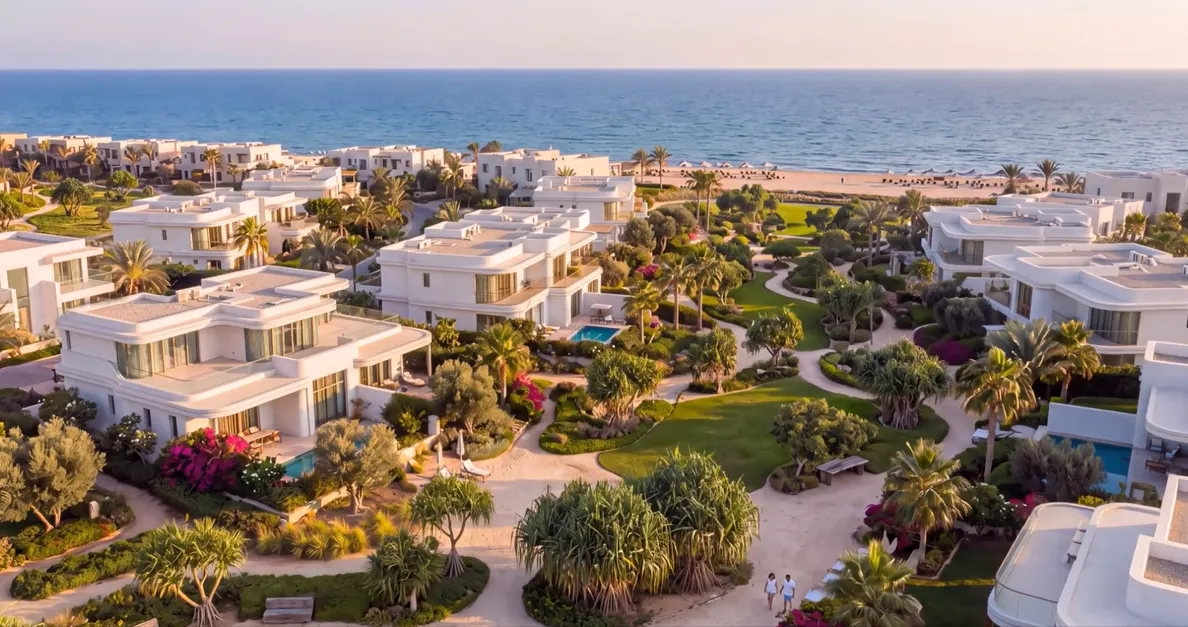
In an extensive analysis shared on LinkedIn, Minister Muththalib addressed allegations published in a recent report by local media outlet “Dhauru”, which argued that the 500-hectare concession granted under a master-development deal with UAE-based developer Eagle Hills amounted to giving away national assets for virtually nothing.
The Minister countered that the opposing report relied on mathematical oversimplification rather than sound urban economics.
Land is undeniably amongst the most valuable assets the State holds, and every agreement involving it should be assessed against the value it can realistically generate for the public.
“The difference between us lies in the interpretation of that one word: realistically.”
‘A Price for a City That Does Not Yet Exist’
At the heart of the Minister’s critique is the report's methodology, which applied the established commercial rate of Hulhumalé—MVR 7,500 per square foot—across the entirety of 500 newly reclaimed hectares at Rasmalé.
Minister Muththalib pointed out that Hulhumalé’s market prices reflect more than two decades of sustained state investment. Reclamation there commenced in 1997, the first residents moved in during 2004, and its value only reached current peaks following decades of utility installations, social infrastructure, and the 2018 opening of the China-Maldives Friendship Bridge—a project Minister Muththalib oversaw as Deputy Minister.
“Rasmalé has none of that yet. It has no bridge, no services and no economic activity. You cannot take a finished city’s price and apply it to an island that is still being built,” he explained.
Instead, Minister Muththalib argued that the industrial island of Thilafushi serves as a more realistic—even generous—benchmark. Land there sells at roughly MVR 1,750 per square foot, despite having active commerce and an under-construction bridge connection to the capital.
The Reality of Land Use and Infrastructure Costs
Minister Muththalib outlined two major structural flaws in the critics' calculations: urban planning constraints and upfront capital requirements.
Sellable Land Allocations: Citing Housing Development Corporation (HDC) metrics from Hulhumalé Phases 1 and 2, the Minister noted that only roughly 48 percent of reclaimed urban land can actually be monetised for residential, commercial, or industrial plots. The remaining 52 percent must be dedicated to non-revenue uses: roads, green spaces, schools, mosques, utility grids, and municipal buildings. Applied to Rasmalé, only about 239 of the 500 hectares could legally be sold.
The USD 1 Billion Barrier: Unserviced sand cannot be marketed. Outfitting 500 hectares with water, electricity networks, sewerage, and road corridors requires around USD 1 billion in upfront sovereign capital—money the state cannot easily borrow amid tight foreign credit markets.
Drawing parallels to ongoing delays in nearby projects, Minister Muththalib cited Gulhifalhu, where the state needs USD 400 million to service 230 hectares of land alongside additional investments for power generation.
“If we cannot finance USD 400 million for Gulhifalhu, how would we finance USD 1 billion for 500 hectares of Rasmalé, with no bridge to Malé at all?” he asked.
Under the state’s realistic best-case scenario—selling all eligible plots at Thilafushi-equivalent rates (MVR 1,750/sq ft) and subtracting the USD 1 billion utility installation cost—the net return to the state would amount to roughly USD 1.5 billion over decades.
What the Eagle Hills Deal Delivers
By contrast, Minister Muththalib asserted that the terms negotiated with Eagle Hills yield guaranteed, recurring, and risk-mitigated cash flows that far exceed what the state could generate independently:
10% Direct Revenue Share: Projected to return roughly USD 3.1 billion (MVR 47.8 billion) over the development phase—surpassing the gross revenue the state could collect from direct land sales, without requiring a penny of taxpayer funds for utility groundwork.
4% Perpetual Transfer Fee: Levied on every property transfer, starting from the developer’s initial leasehold sale and continuing across every secondary transaction in perpetuity, estimated to deliver an additional USD 1.24 billion (MVR 19.12 billion).
5,000 Upfront Homes: Eagle Hills is committed to financing 5,000 three-bedroom social housing units in Hulhumalé immediately, delivering a social dividend before Rasmalé records a single dollar in profit.
Foreign Investment and Jobs: The development is modeled to generate USD 22 billion in net foreign direct investment, support over 60,000 direct and indirect jobs, and draw one million tourists annually, generating more than USD 2 billion per year in visitor spending subject to Tourism Goods and Services Tax (TGST).
Rebutting the ‘Indirect Sale’ Claim
Addressing allegations that the contract surrenders state sovereignty through a covert land sale, the Minister clarified the legal mechanics of the 99-year lease structure.
He emphasised that land title remains entirely with the Maldivian state. Eagle Hills is permitted to market units only on 99-year leases to buyers pre-approved by the government.
“In a sale, the State steps away. As opposed to this, here, the State is a party to every transaction, for as long as the development exists. The land’s value returns to the State not once, a century from now, but every time a property changes hands.”
He also noted that the developer shoulders the construction risk and sales absorption risk across fluctuating global property cycles, while the state issues no sovereign guarantees.
‘The Choice Before Us’
Rejecting discount rate calculations used by critics to argue that property receipts would take nearly three centuries to recover the land's value, Minister Muththalib noted that applying standard financial discounting makes self-development look far worse: discounted at 5%, independent state development yields just USD 600 million today, and at a 9% discount rate, drops close to zero. The partnership’s structured direct receipts, by contrast, carry a present value of USD 2.8 billion to USD 3.3 billion.
Concluding his argument, Minister Muththalib reiterated that the remaining 500 hectares of Rasmalé remain reserved exclusively for domestic housing—sufficient to accommodate more than 200,000 Maldivians who will directly benefit from the adjacent commercial hub.
“The choice before us was never between USD 24 billion and USD 4 billion. The USD 24 billion was never on the table,” he concluded.
“The real choice was between reclaimed land that waits — for a billion dollars of services we would have to borrow, and for buyers who may never come — and a partnership that starts building an economy now, funds homes first, and pays the State on every sale.”
Leave a comment
Comments
No comments yet. Be the first to comment!